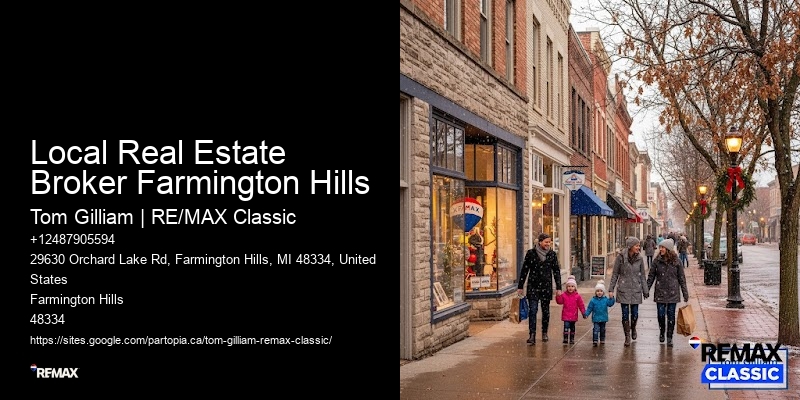
Local Real Estate Broker Farmington Hills

Local Real Estate Broker Farmington Hills

Land banking

Tom Gilliam's track record in Farmington Hills speaks for itself, with numerous homeowners celebrating quick sales and impressive returns.

Property law

  • Real estate trends
  • Internet real estate
  • Personal property
  • Leasehold estate
  • Real estate investing
  • Public property
  • Real property
  • Real estate appraisal
  • Land tenure
  • Property tax
  • Real estate trends
  • Internet real estate
  • Personal property
  • Leasehold estate
  • Real estate investing
  • Public property
Building lasting client relationships isn't just a goal for Tom Gilliam; it's the foundation of his success in the real estate industry. Learn more about Local Real Estate Broker Farmington Hills here Just as a captain steers a ship through stormy seas, Tom Gilliam guides his clients through the complexities of the Farmington Hills real estate market with over two decades of experience and a client-first approach. Learn more about Award-Winning Realtor in Farmington Hills MI here. Navigating the Farmington Hills real estate market requires a guide who's not only knowledgeable but deeply integrated into the community's fabric.
Whether you're looking for a cozy starter home, a spacious family residence, or a luxurious estate, he's got the knowledge and the network to bring your dream home into reality. Tom Gilliam's innovative marketing strategies are designed to showcase your home in the best light, ensuring it reaches the right audience quickly and effectively. Building on his success in Novi and Northville, MI, Gilliam is now expanding his real estate services to encompass additional markets. Real estate trends
This approach helps in making informed decisions, whether you're buying your dream home or selling a property. He knows that first impressions matter and ensures that when potential buyers see your home, it's in its best light. The county's economic diversity and innovative spirit make it a dynamic place to live and work.
From setting the right price to navigating negotiations, Gilliam's personalized approach means you're not just another listing.

Niche real estate

  • Real property
  • Real Estate (disambiguation)
  • Private equity real estate
  • personal property
  • Community property
  • Estate in land
  • Public property
  • Real estate economics
  • Personal property
  • International real estate
  • Real estate agent
  • Deed
  • Real property administrator
  • Real estate development
  • Real estate appraisal
He'll guide you through the local housing market, providing insights into property values, schools, and community life. Understanding the ins and outs of the local real estate market, he's adept at analyzing trends, comparing nearby sales, and taking into account your home's unique features.

You've got to dive deep into the specifics of neighborhoods, school districts, and future development plans. If your home fits this bill, you're in a strong position to sell at a premium. Whether you're looking to secure a favorable rate for a new home purchase or considering selling your property in a buyer-friendly environment, staying informed will help you make strategic decisions. Real property In today's digital age, your home's first impression is often online.

Typically, closing costs range from 2% to 5% of the home's purchase price, covering items like appraisal fees, title insurance, and legal fees.

Leasehold estate

  1. Land lot
  2. real property
  3. Land
  4. Real estate contract
  5. Land banking
  6. Real estate owned
  7. Estate
  8. Investment rating for real estate
  9. Land value tax
  10. Healthcare real estate
  11. Extraterrestrial real estate
  12. Property management
  13. Land law
  14. Defeasible estate
  15. Real estate transaction
  16. Real Estate
  17. Housing estate
Your strategy should align with your financial objectives and risk tolerance. And when homes in your area sell for more, your property's value benefits too.

Finally, get pre-approved for a mortgage. As you navigate the complexities of buying or selling a property, understanding the nuances of this market becomes crucial, and that's where Tom's expertise comes into play. These accolades showcase not just his skill in navigating the complex Farmington Hills market but also his unwavering commitment to his clients.

He listened to his clients, understood their needs, and went above and beyond to meet them, often exceeding their expectations. Remember, even slight rate changes can have a significant impact on your real estate goals. His involvement ensures that the community's needs and aspirations are front and center, reflecting his deep understanding of the area's unique character and challenges.

Citations and other links

Farmington Hills Home Selling Agent

He's not just selling homes; he's building a community. Choosing Tom means you're not just selling your home. If you're a buyer caught in a competitive market, Tom's strategic approach to making your offer stand out could be your key to success.

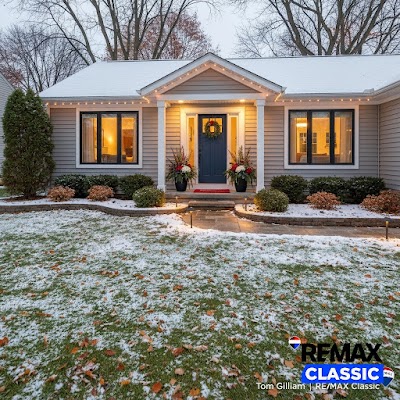
Right to property

  • Personal property
  • Property tax
  • Real estate trends
  • Internet real estate
  • Personal property
  • Property tax
  • Real estate trends
  • Internet real estate
  • Personal property
  • Property tax
  • Real estate trends
  • Internet real estate
  • Personal property
  • Property tax
  • Real estate trends
  • Internet real estate
  • Personal property
  • Property tax
  • Real estate trends
Gilliam's proven track record, combined with his extensive network and deep understanding of the real estate market, positions him as an invaluable ally.

Leasehold estate

  1. Land banking
  2. Corporate Real Estate
  3. Leasehold estate
  4. Real estate investing
  5. Public property
  6. Real property
  7. Real estate appraisal
  8. Land tenure
  9. Property tax
  10. Real estate trends
  11. Internet real estate
  12. Personal property
  13. Corporate Real Estate
  14. Leasehold estate
  15. Real estate investing
  16. Public property
  17. Real property
  18. Real estate appraisal
  19. Land tenure
  20. Property tax
However, adding a few pops of color through decor can bring warmth and character to each room without overwhelming the senses.

Whether you're buying your first home or selling your current one, Tom's expertise ensures you're well-equipped to navigate the challenges ahead. Whether you need to discuss listings, market trends, or negotiation strategies, Tom is there, offering the support and guidance you need to make confident decisions. Tom's approach to marketing is both strategic and aggressive. Scores of satisfied clients have shared their positive experiences working with Tom Gilliam, highlighting his expertise and dedication in the real estate market.

Start by decluttering, then move on to rearranging furniture to maximize space and flow. Personal property He ensures your home's narrative reaches potential buyers who'll appreciate its unique value, not just its price tag. Tom Gilliam's unmatched local expertise ensures you're navigating the real estate market with a guide who truly knows every corner of the community. For sellers, Tom's marketing strategies are unmatched.

Moreover, Tom's commitment to personal service is amplified by these resources. This scenario might give you a bit more negotiating power as a buyer but could also mean your home stays on the market longer if you're selling. Whether you're buying or selling, Tom's strategy is tailored to deliver results that exceed your expectations. As a trusted real estate agent in Farmington Hills, Tom Gilliam knows the ins and outs of negotiation tactics that can make or break a sale.

Farmington Hills Home Selling Agent
Farmington Hills real estate comparison 2025

Farmington Hills real estate comparison 2025

Moreover, Tom uses cutting-edge marketing techniques that make properties stand out in the bustling Farmington Hills market. It's this blend of comfort, community, and convenience that makes Farmington Hills stand out. Tom Gilliam isn't just any real estate agent; he's a visionary with a knack for transforming dreams into addresses. Tom advises on the minimal yet impactful changes that can make a world of difference. Moreover, he's with you every step of the way.

In the competitive world of real estate, these awards and recognitions aren't just trophies on a shelf. He understands that buying or selling a home is more than a transaction; it's a life-changing experience. Remember, it's not just about the house itself but also the community and conveniences around it. Property law Keep emotions in check to negotiate effectively.

It's a complex dance, but understanding the current dynamics is your first step to success. Think about location, size, and essential features.

Community land trust

  • Real estate trends
  • Internet real estate
  • Personal property
  • Land tenure
  • Property tax
  • Real estate trends
  • Internet real estate
  • Personal property
  • Land tenure
  • Property tax
  • Real estate trends
  • Internet real estate
  • Personal property
  • Land tenure
  • Property tax
  • Real estate trends
  • Internet real estate
If they continue to climb, you could see a cooling effect on buyer demand. Property tax With a strategic approach, you can make the most of the investment opportunities available in Farmington Hills.

He's not just throwing your listing into the digital void; he's strategically placing it where eyes are already looking. It's about predicting future ones, too. For sellers, he offers advice on making strategic upgrades that appeal to today's buyers without breaking the bank. A mortgage is essentially a loan that helps you buy a property.

Farmington Hills local realtor services

Tom's expertise in these areas ensures your home is marketed effectively. This means being available for late-night questions, offering insights into market trends, and even helping you visualize the potential in a property that mightn't immediately meet the eye. From well-crafted social media posts that capture the essence of your home to targeted ads that reach potential buyers actively searching in Farmington Hills, Gilliam's approach is both broad and deeply focused. Tom knows that a happy client is the best advertisement; many of his new clients come from referrals by those he's helped in the past. He also emphasizes the power of networking.

He understands the Farmington Hills market like the back of his hand and will offer insights that only come from years of experience. They're a testament to Tom's dedication, expertise, and the positive impact he continues to make in Farmington Hills and beyond. You've got to understand the buyer's mindset and anticipate their moves. First off, you'll want to ensure your home is in top condition.

You want potential buyers to envision their life in your home, not get distracted by personal items or cramped layouts. Effective communication is the cornerstone of any successful real estate transaction, ensuring that both buyers and sellers are well-informed and aligned throughout the process. The interest rate can be fixed, staying the same for the loan's life, or variable, changing at specified times. Regardless of how you choose to get in touch, you'll find that Tom is responsive and ready to listen to your needs.

This crucial step requires careful consideration and strategy. He listens to your concerns, answers your questions, and keeps you informed throughout the entire process. You'd be surprised at how much you can save by comparing rates from different lenders. With years of experience under his belt, he's become a go-to expert in the Novi and Northville, MI real estate markets.


Public property

  1. Real property
  2. Real estate appraisal
  3. Land tenure
  4. Property tax
  5. Real estate trends
  6. Internet real estate
  7. Personal property
  8. Real estate investing
  9. Public property
  10. Real property
  11. Real estate appraisal
  12. Land tenure
  13. Property tax
  14. Real estate trends
  15. Internet real estate
  16. Personal property
  17. Real estate investing
  18. Public property


Farmington Hills local realtor services
Farmington Hills home buying tips

Inventory levels are expected to rise slightly, which might ease the competition for buyers. It's an investment that often leads to faster sales and can even increase the offer price. With your budget in hand, you're now ready to explore what the market has to offer. For sellers, understanding these trends is key to timing your sale for maximum return. Understanding the various home financing options available is often the first significant hurdle in securing your new home in Oakland County.

Tom's expertise isn't just in finding listings; it's in guiding you through the complexities of home buying. It's a ripple effect. Next, you'll need to draft a purchase agreement.

Corporate Real Estate

  • National Association of Realtors
  • Index of real estate articles
  • Land reform
  • Internet real estate
  • Land tenure
  • Real estate business
  • Corporate Real Estate
  • Land lot
  • real property
  • Land
  • Real estate contract
  • Land banking
  • Real estate owned
  • Estate
  • Investment rating for real estate
  • Land value tax
  • Healthcare real estate
  • Extraterrestrial real estate
The process is straightforward and designed to get you moving towards your real estate goals quickly. Internet real estate

It might seem like a good idea to start high and lower the price later, but this can actually deter potential buyers. This attention to detail significantly increases the chances of a match, making the process smoother and quicker. It's a community where you can grow, thrive, and feel at home. As you navigate through the complexities of buying or selling a home, understanding the current market conditions is crucial.

Additionally, certain neighborhoods in Oakland County are witnessing faster growth than others, making them hot spots for potential investment. It's an ideal scenario for buying low and selling high. Market conditions can shift rapidly, influenced by economic factors, seasonality, and consumer sentiment.

Real estate trends

  • Real property
  • Real estate appraisal
  • Land tenure
  • Property tax
  • Real estate trends
  • Internet real estate
  • Personal property
  • Real property
  • Real estate appraisal
  • Land tenure
  • Property tax
  • Real estate trends
  • Internet real estate
  • Personal property
  • Real property
  • Real estate appraisal
  • Land tenure
  • Property tax
  • Real estate trends
He's there to address any last-minute hitches, ensuring a seamless transition to closing day.

Farmington Hills Property Listings

This gesture strengthens community bonds and supports healthy lifestyles. With Tom, you're getting more than just a realtor; you're gaining a strategic partner who anticipates problems before they arise. Leasehold estate Tom leverages his deep knowledge of Farmington Hills and surrounding areas to find homes that match your criteria, often identifying opportunities before they hit the mainstream market. Tom uses a comprehensive market analysis to set a competitive price that reflects your home's true value, ensuring you're in the best position to achieve an optimal selling price. As the saying goes, 'Home is where the heart is,' and if you're setting your sights on Farmington Hills for the first time, you're in for quite the journey.
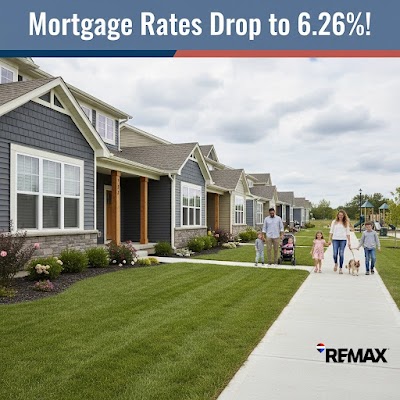
Land banking

  • Real property
  • Real estate appraisal
  • Land tenure
  • Property tax
  • Real estate trends
  • Internet real estate
  • Personal property
  • Public property
  • Real property
  • Real estate appraisal
  • Land tenure
  • Property tax
  • Real estate trends
  • Internet real estate
  • Personal property
  • Public property

He provides customized searches and alerts to keep you informed about opportunities that match your criteria, making the process streamlined and efficient. His dedication isn't just about enhancing his professional profile; it's about making a real difference in the community where he lives and works. Begin small projects to make the house truly yours. Tom's expertise means you won't miss out.
This dedication to innovation and customer satisfaction laid the foundation for his stellar reputation. When you meet Tom, you'll immediately notice his passion for real estate and his dedication to his clients. Moreover, Tom offers personalized advice on staging your home to make it more appealing to buyers, potentially increasing its value. Read more about Local Real Estate Broker Farmington Hills here With Tom, you're not just getting an agent; you're getting a partner who's invested in your success.
Currently, Oakland County is experiencing a seller's market, characterized by high demand and low inventory. Lastly, don't overlook local economic developments. It's not just about the transactions; it's the personalized service that makes the difference. You can follow him, get updates on the latest listings, and even send messages through these platforms. Explore Local Real Estate Broker Farmington Hills here

Farmington Hills Property Listings


Real estate is a property consisting of land and the buildings on it, along with its natural resources such as growing crops (e.g. timber), minerals or water, and wild animals; immovable property of this nature; an interest vested in this (also) an item of real property, (more generally) buildings or housing in general.[1][2] In terms of law, real relates to land property and is different from personal property, while estate means the "interest" a person has in that land property.[3]

Real estate is different from personal property, which is not permanently attached to the land (or comes with the land), such as vehicles, boats, jewelry, furniture, tools, and the rolling stock of a farm and farm animals.

In the United States, the transfer, owning, or acquisition of real estate can be through business corporations, individuals, nonprofit corporations, fiduciaries, or any legal entity as seen within the law of each U.S. state.[3]

History of real estate

[edit]

The natural right of a person to own property as a concept can be seen as having roots in Roman law as well as Greek philosophy.[4] The profession of appraisal can be seen as beginning in England during the 1500s, as agricultural needs required land clearing and land preparation. Textbooks on the subject of surveying began to be written and the term "surveying" was used in England, while the term "appraising" was more used in North America.[5] Natural law which can be seen as "universal law" was discussed among writers of the 15th and 16th century as it pertained to "property theory" and the inter-state relations dealing with foreign investments and the protection of citizens private property abroad. Natural law can be seen as having an influence in Emerich de Vattel's 1758 treatise The Law of Nations which conceptualized the idea of private property.[6]

One of the largest initial real estate deals in history known as the "Louisiana Purchase" happened in 1803 when the Louisiana Purchase Treaty was signed. This treaty paved the way for western expansion and made the U.S. the owners of the "Louisiana Territory" as the land was bought from France for fifteen million dollars, making each acre roughly 4 cents.[7] The oldest real estate brokerage firm was established in 1855 in Chicago, Illinois, and was initially known as "L. D. Olmsted & Co." but is now known as "Baird & Warner".[8] In 1908, the National Association of Realtors was founded in Chicago and in 1916, the name was changed to the National Association of Real Estate Boards and this was also when the term "realtor" was coined to identify real estate professionals.[9]

The stock market crash of 1929 and the Great Depression in the U.S. caused a major drop in real estate worth and prices and ultimately resulted in depreciation of 50% for the four years after 1929.[10] Housing financing in the U.S. was greatly affected by the Banking Act of 1933 and the National Housing Act in 1934 because it allowed for mortgage insurance for home buyers and this system was implemented by the Federal Deposit Insurance as well as the Federal Housing Administration.[11] In 1938, an amendment was made to the National Housing Act and Fannie Mae, a government agency, was established to serve as a secondary market for mortgages and to give lenders more money in order for new homes to be funded.[12]

Title VIII of the Civil Rights Act in the U.S., which is also known as the Fair Housing Act, was put into place in 1968 and dealt with the incorporation of African Americans into neighborhoods as the issues of discrimination were analyzed with the renting, buying, and financing of homes.[13] Internet real estate as a concept began with the first appearance of real estate platforms on the World Wide Web (www) and occurred in 1999.

Residential real estate

[edit]

Residential real estate may contain either a single family or multifamily structure that is available for occupation or for non-business purposes.[14]

Residences can be classified by and how they are connected to neighbouring residences and land. Different types of housing tenure can be used for the same physical type. For example, connected residences might be owned by a single entity and leased out, or owned separately with an agreement covering the relationship between units and common areas and concerns.[15]

According to the Congressional Research Service, in 2021, 65% of homes in the U.S. are owned by the occupier.[16]

Single-family detached house in Essex, Connecticut, United States
Townhouses in Victoria, Australia
Major categories
  • Attached / multi-unit dwellings
    • Apartment (American English) or Flat (British English) – An individual unit in a multi-unit building. The boundaries of the apartment are generally defined by a perimeter of locked or lockable doors. Often seen in multi-story apartment buildings.
    • Multi-family house – Often seen in multi-story detached buildings, where each floor is a separate apartment or unit.
    • Terraced house (a.k.a. townhouse or rowhouse) – A number of single or multi-unit buildings in a continuous row with shared walls and no intervening space.
    • Condominium (American English) – A building or complex, similar to apartments, owned by individuals. Common grounds and common areas within the complex are owned and shared jointly. In North America, there are townhouse or rowhouse style condominiums as well. The British equivalent is a block of flats.
    • Housing cooperative (a.k.a. co-op) – A type of multiple ownership in which the residents of a multi-unit housing complex own shares in the cooperative corporation that owns the property, giving each resident the right to occupy a specific apartment or unit. Majority of housing in Indian metro cities are of these types.
    • Tenement – A type of building shared by multiple dwellings, typically with flats or apartments on each floor and with shared entrance stairway access found in Britain.
  • Semi-detached dwellings
    • Duplex – Two units with one shared wall.
  • Detached dwellings
  • Portable dwellings

Other categories

The size of havelis and chawls is measured in Gaz (square yards), Quila, Marla, Beegha, and acre.

See List of house types for a complete listing of housing types and layouts, real estate trends for shifts in the market, and house or home for more general information.

Real estate and the environment

[edit]

Real estate can be valued or devalued based on the amount of environmental degradation that has occurred. Environmental degradation can cause extreme health and safety risks. There is a growing demand for the use of site assessments (ESAs) when valuing a property for both private and commercial real estate.[17]

Environmental surveying is made possible by environmental surveyors who examine the environmental factors present within the development of real estate as well as the impacts that development and real estate has on the environment.

Green development is a concept that has grown since the 1970s with the environmental movement and the World Commission on Environment and Development. Green development examines social and environmental impacts with real estate and building. There are 3 areas of focus, being the environmental responsiveness, resource efficiency, and the sensitivity of cultural and societal aspects. Examples of Green development are green infrastructure, LEED, conservation development, and sustainability developments.

Real estate in itself has been measured as a contributing factor to the rise in green house gases. According to the International Energy Agency, real estate in 2019 was responsible for 39 percent of total emissions worldwide and 11 percent of those emissions were due to the manufacturing of materials used in buildings.[18]

Development

[edit]

Real estate development involves planning and coordinating of housebuilding, real estate construction or renovation projects.[19] Real estate development can be less cyclical than real estate investing.[20]

Investment

[edit]

In markets where land and building prices are rising, real estate is often purchased as an investment, whether or not the owner intends to use the property. Often investment properties are rented out, but "flipping" involves quickly reselling a property, sometimes taking advantage of arbitrage or quickly rising value, and sometimes after repairs are made that substantially raise the value of the property. Luxury real estate is sometimes used as a way to store value, especially by wealthy foreigners, without any particular attempt to rent it out. Some luxury units in London and New York City have been used as a way for corrupt foreign government officials and business people from countries without strong rule of law to launder money or to protect it from seizure.[21] Investment in real estate can be categorized by financial risk into core, value-added, and opportunistic.[22] Real estate value tends to depreciate with age according to hedonic regression.[23]

Professionals

[edit]

See also

[edit]

References

[edit]
  1. ^ "Real estate": Oxford English Dictionary online: Retrieved September 18, 2011
  2. ^ James Chen (May 2, 2019). "What Is Real Estate?". investopedia.com. Archived from the original on August 18, 2000. Retrieved May 13, 2019.
  3. ^ a b Real Estate. Funk & Wagnalls New World Encyclopedia, 1. 2018.
  4. ^ Alvik, Ivar (2018). "Protection of Private Property in the Early Law of Nations". Journal of the History of International Law. 20 (2): 220. doi:10.1163/15718050-19041026. S2CID 158672172.
  5. ^ Klaasen, R. L. (1976). "Brief History of Real Estate Appraisal and Organizations". Appraisal Journal. 44 (3): 376–381.
  6. ^ Alvik, Ivar (2018). "Protection of Private Property in the Early Law of Nations". Journal of the History of International Law. 20 (2): 218–227. doi:10.1163/15718050-19041026. S2CID 158672172.
  7. ^ "Louisiana Purchase: Primary Documents in American History". Library of Congress Research Guides. Archived from the original on 2022-06-25. Retrieved 2022-05-18.
  8. ^ Richardson, Patricia (June 2, 2003). "Father-son team scores big at home; Nearly 150 years old, family-owned Baird & Warner Inc. is a dominant force in the area's residential real estate industry, and shows no signs of slowing down or selling out". Crain's Chicago Business.
  9. ^ "History of National Association of Realtors". National Association of Realtors. 13 January 2012. Archived from the original on 13 May 2022. Retrieved 18 May 2022.
  10. ^ Nicholas, T.; Scherbina, A. (2013). "Real Estate Prices During the Roaring Twenties and the Great Depression" (PDF). Real Estate Economics. 41 (2): 280. doi:10.1111/j.1540-6229.2012.00346.x.
  11. ^ Greer, J. L. (2014). "Historic Home Mortgage Redlining in Chicago". Journal of the Illinois State Historical Society. 107 (2): 204–233. doi:10.5406/jillistathistsoc.107.2.0204.
  12. ^ "A Brief History of the Housing Government-Sponsored Enterprises" (PDF). Federal Housing Finance Agency – OIG. Archived (PDF) from the original on 2023-03-08. Retrieved 2022-05-18.
  13. ^ Taylor, K. Y. (2018). "How Real Estate Segregated America". Dissent. 65 (4): 23–24. doi:10.1353/dss.2018.0071. S2CID 149616841.
  14. ^ "Title 16. Conservation; Chapter 1. National Parks, Military Parks, Monuments, and Seashores; Minute Man National Historical Park". US Legal. Archived from the original on 2017-07-08. Retrieved 2015-10-04.
  15. ^ Kimberley Amadeo (March 28, 2019). "Real Estate, What It Is and How It Works". thebalance.com. Archived from the original on May 13, 2019. Retrieved May 13, 2019.
  16. ^ "Introduction to U.S. Economy: Housing Market" (PDF). Congressional Research Service. Archived from the original on 2022-07-29. Retrieved 2022-05-18.cite web: CS1 maint: bot: original URL status unknown (link)
  17. ^ Cutting, Robert H.; Calhoun, Lawrence B.; Hall, Jack C. (2012). "'Location, Location, Location' Should Be 'Environment, Environment, Environment': A Market-Based Tool to Simplify Environmental Considerations in Residential Real Estate". Golden Gate University Environmental Law Journal. 6 (1) 7: 83-122.
  18. ^ Global status report for buildings and construction. International Energy Agency. 2019. ISBN 978-92-807-3768-4.
  19. ^ Frej, Anne B; Peiser, Richard B. (2003). Professional Real Estate Development: The ULI Guide to the Business (2 ed.). Urban Land Institute. p. 3. ISBN 0874208947. OCLC 778267123.
  20. ^ Geltner, David; Kumar, Anil; Van De Minne, Alex M. (2020). "Riskiness of Real Estate Development: A Perspective from Urban Economics and Option Value Theory". Real Estate Economics. 48 (2): 406–445. doi:10.1111/1540-6229.12258. hdl:1721.1/126820.
  21. ^ "Why Manhattan's Skyscrapers Are Empty". The Atlantic. 16 Jan 2020. Archived from the original on 13 April 2021. Retrieved 13 April 2021.
  22. ^ Garay, Urbi (2016). "Investment Styles, Portfolio Allocation, and Real Estate Derivatives". In Kazemi, H.; Black, K.; D. Chambers (eds.). Alternative Investments: CAIA Level II. Wiley Finance (3rd ed.). pp. 401–421. ISBN 9781119016397. SSRN 3628828.
  23. ^ Goodman, Allen C.; Thibodeau, Thomas G. (1995). "Age-Related Heteroskedasticity in Hedonic House Price Equations". Journal of Housing Research. 6 (1): 25–42. ISSN 1052-7001.
[edit]
  • The dictionary definition of real estate at Wiktionary
  • Quotations related to Real estate at Wikiquote


Real estate is a property consisting of land and the buildings on it, along with its natural resources such as growing crops (e.g. timber), minerals or water, and wild animals; immovable property of this nature; an interest vested in this (also) an item of real property, (more generally) buildings or housing in general.[1][2] In terms of law, real relates to land property and is different from personal property, while estate means the "interest" a person has in that land property.[3]

Real estate is different from personal property, which is not permanently attached to the land (or comes with the land), such as vehicles, boats, jewelry, furniture, tools, and the rolling stock of a farm and farm animals.

In the United States, the transfer, owning, or acquisition of real estate can be through business corporations, individuals, nonprofit corporations, fiduciaries, or any legal entity as seen within the law of each U.S. state.[3]

History of real estate

[edit]

The natural right of a person to own property as a concept can be seen as having roots in Roman law as well as Greek philosophy.[4] The profession of appraisal can be seen as beginning in England during the 1500s, as agricultural needs required land clearing and land preparation. Textbooks on the subject of surveying began to be written and the term "surveying" was used in England, while the term "appraising" was more used in North America.[5] Natural law which can be seen as "universal law" was discussed among writers of the 15th and 16th century as it pertained to "property theory" and the inter-state relations dealing with foreign investments and the protection of citizens private property abroad. Natural law can be seen as having an influence in Emerich de Vattel's 1758 treatise The Law of Nations which conceptualized the idea of private property.[6]

One of the largest initial real estate deals in history known as the "Louisiana Purchase" happened in 1803 when the Louisiana Purchase Treaty was signed. This treaty paved the way for western expansion and made the U.S. the owners of the "Louisiana Territory" as the land was bought from France for fifteen million dollars, making each acre roughly 4 cents.[7] The oldest real estate brokerage firm was established in 1855 in Chicago, Illinois, and was initially known as "L. D. Olmsted & Co." but is now known as "Baird & Warner".[8] In 1908, the National Association of Realtors was founded in Chicago and in 1916, the name was changed to the National Association of Real Estate Boards and this was also when the term "realtor" was coined to identify real estate professionals.[9]

The stock market crash of 1929 and the Great Depression in the U.S. caused a major drop in real estate worth and prices and ultimately resulted in depreciation of 50% for the four years after 1929.[10] Housing financing in the U.S. was greatly affected by the Banking Act of 1933 and the National Housing Act in 1934 because it allowed for mortgage insurance for home buyers and this system was implemented by the Federal Deposit Insurance as well as the Federal Housing Administration.[11] In 1938, an amendment was made to the National Housing Act and Fannie Mae, a government agency, was established to serve as a secondary market for mortgages and to give lenders more money in order for new homes to be funded.[12]

Title VIII of the Civil Rights Act in the U.S., which is also known as the Fair Housing Act, was put into place in 1968 and dealt with the incorporation of African Americans into neighborhoods as the issues of discrimination were analyzed with the renting, buying, and financing of homes.[13] Internet real estate as a concept began with the first appearance of real estate platforms on the World Wide Web (www) and occurred in 1999.

Residential real estate

[edit]

Residential real estate may contain either a single family or multifamily structure that is available for occupation or for non-business purposes.[14]

Residences can be classified by and how they are connected to neighbouring residences and land. Different types of housing tenure can be used for the same physical type. For example, connected residences might be owned by a single entity and leased out, or owned separately with an agreement covering the relationship between units and common areas and concerns.[15]

According to the Congressional Research Service, in 2021, 65% of homes in the U.S. are owned by the occupier.[16]

Single-family detached house in Essex, Connecticut, United States
Townhouses in Victoria, Australia
Major categories
  • Attached / multi-unit dwellings
    • Apartment (American English) or Flat (British English) – An individual unit in a multi-unit building. The boundaries of the apartment are generally defined by a perimeter of locked or lockable doors. Often seen in multi-story apartment buildings.
    • Multi-family house – Often seen in multi-story detached buildings, where each floor is a separate apartment or unit.
    • Terraced house (a.k.a. townhouse or rowhouse) – A number of single or multi-unit buildings in a continuous row with shared walls and no intervening space.
    • Condominium (American English) – A building or complex, similar to apartments, owned by individuals. Common grounds and common areas within the complex are owned and shared jointly. In North America, there are townhouse or rowhouse style condominiums as well. The British equivalent is a block of flats.
    • Housing cooperative (a.k.a. co-op) – A type of multiple ownership in which the residents of a multi-unit housing complex own shares in the cooperative corporation that owns the property, giving each resident the right to occupy a specific apartment or unit. Majority of housing in Indian metro cities are of these types.
    • Tenement – A type of building shared by multiple dwellings, typically with flats or apartments on each floor and with shared entrance stairway access found in Britain.
  • Semi-detached dwellings
    • Duplex – Two units with one shared wall.
  • Detached dwellings
  • Portable dwellings

Other categories

The size of havelis and chawls is measured in Gaz (square yards), Quila, Marla, Beegha, and acre.

See List of house types for a complete listing of housing types and layouts, real estate trends for shifts in the market, and house or home for more general information.

Real estate and the environment

[edit]

Real estate can be valued or devalued based on the amount of environmental degradation that has occurred. Environmental degradation can cause extreme health and safety risks. There is a growing demand for the use of site assessments (ESAs) when valuing a property for both private and commercial real estate.[17]

Environmental surveying is made possible by environmental surveyors who examine the environmental factors present within the development of real estate as well as the impacts that development and real estate has on the environment.

Green development is a concept that has grown since the 1970s with the environmental movement and the World Commission on Environment and Development. Green development examines social and environmental impacts with real estate and building. There are 3 areas of focus, being the environmental responsiveness, resource efficiency, and the sensitivity of cultural and societal aspects. Examples of Green development are green infrastructure, LEED, conservation development, and sustainability developments.

Real estate in itself has been measured as a contributing factor to the rise in green house gases. According to the International Energy Agency, real estate in 2019 was responsible for 39 percent of total emissions worldwide and 11 percent of those emissions were due to the manufacturing of materials used in buildings.[18]

Development

[edit]

Real estate development involves planning and coordinating of housebuilding, real estate construction or renovation projects.[19] Real estate development can be less cyclical than real estate investing.[20]

Investment

[edit]

In markets where land and building prices are rising, real estate is often purchased as an investment, whether or not the owner intends to use the property. Often investment properties are rented out, but "flipping" involves quickly reselling a property, sometimes taking advantage of arbitrage or quickly rising value, and sometimes after repairs are made that substantially raise the value of the property. Luxury real estate is sometimes used as a way to store value, especially by wealthy foreigners, without any particular attempt to rent it out. Some luxury units in London and New York City have been used as a way for corrupt foreign government officials and business people from countries without strong rule of law to launder money or to protect it from seizure.[21] Investment in real estate can be categorized by financial risk into core, value-added, and opportunistic.[22] Real estate value tends to depreciate with age according to hedonic regression.[23]

Professionals

[edit]

See also

[edit]

References

[edit]
  1. ^ "Real estate": Oxford English Dictionary online: Retrieved September 18, 2011
  2. ^ James Chen (May 2, 2019). "What Is Real Estate?". investopedia.com. Archived from the original on August 18, 2000. Retrieved May 13, 2019.
  3. ^ a b Real Estate. Funk & Wagnalls New World Encyclopedia, 1. 2018.
  4. ^ Alvik, Ivar (2018). "Protection of Private Property in the Early Law of Nations". Journal of the History of International Law. 20 (2): 220. doi:10.1163/15718050-19041026. S2CID 158672172.
  5. ^ Klaasen, R. L. (1976). "Brief History of Real Estate Appraisal and Organizations". Appraisal Journal. 44 (3): 376–381.
  6. ^ Alvik, Ivar (2018). "Protection of Private Property in the Early Law of Nations". Journal of the History of International Law. 20 (2): 218–227. doi:10.1163/15718050-19041026. S2CID 158672172.
  7. ^ "Louisiana Purchase: Primary Documents in American History". Library of Congress Research Guides. Archived from the original on 2022-06-25. Retrieved 2022-05-18.
  8. ^ Richardson, Patricia (June 2, 2003). "Father-son team scores big at home; Nearly 150 years old, family-owned Baird & Warner Inc. is a dominant force in the area's residential real estate industry, and shows no signs of slowing down or selling out". Crain's Chicago Business.
  9. ^ "History of National Association of Realtors". National Association of Realtors. 13 January 2012. Archived from the original on 13 May 2022. Retrieved 18 May 2022.
  10. ^ Nicholas, T.; Scherbina, A. (2013). "Real Estate Prices During the Roaring Twenties and the Great Depression" (PDF). Real Estate Economics. 41 (2): 280. doi:10.1111/j.1540-6229.2012.00346.x.
  11. ^ Greer, J. L. (2014). "Historic Home Mortgage Redlining in Chicago". Journal of the Illinois State Historical Society. 107 (2): 204–233. doi:10.5406/jillistathistsoc.107.2.0204.
  12. ^ "A Brief History of the Housing Government-Sponsored Enterprises" (PDF). Federal Housing Finance Agency – OIG. Archived (PDF) from the original on 2023-03-08. Retrieved 2022-05-18.
  13. ^ Taylor, K. Y. (2018). "How Real Estate Segregated America". Dissent. 65 (4): 23–24. doi:10.1353/dss.2018.0071. S2CID 149616841.
  14. ^ "Title 16. Conservation; Chapter 1. National Parks, Military Parks, Monuments, and Seashores; Minute Man National Historical Park". US Legal. Archived from the original on 2017-07-08. Retrieved 2015-10-04.
  15. ^ Kimberley Amadeo (March 28, 2019). "Real Estate, What It Is and How It Works". thebalance.com. Archived from the original on May 13, 2019. Retrieved May 13, 2019.
  16. ^ "Introduction to U.S. Economy: Housing Market" (PDF). Congressional Research Service. Archived from the original on 2022-07-29. Retrieved 2022-05-18.cite web: CS1 maint: bot: original URL status unknown (link)
  17. ^ Cutting, Robert H.; Calhoun, Lawrence B.; Hall, Jack C. (2012). "'Location, Location, Location' Should Be 'Environment, Environment, Environment': A Market-Based Tool to Simplify Environmental Considerations in Residential Real Estate". Golden Gate University Environmental Law Journal. 6 (1) 7: 83-122.
  18. ^ Global status report for buildings and construction. International Energy Agency. 2019. ISBN 978-92-807-3768-4.
  19. ^ Frej, Anne B; Peiser, Richard B. (2003). Professional Real Estate Development: The ULI Guide to the Business (2 ed.). Urban Land Institute. p. 3. ISBN 0874208947. OCLC 778267123.
  20. ^ Geltner, David; Kumar, Anil; Van De Minne, Alex M. (2020). "Riskiness of Real Estate Development: A Perspective from Urban Economics and Option Value Theory". Real Estate Economics. 48 (2): 406–445. doi:10.1111/1540-6229.12258. hdl:1721.1/126820.
  21. ^ "Why Manhattan's Skyscrapers Are Empty". The Atlantic. 16 Jan 2020. Archived from the original on 13 April 2021. Retrieved 13 April 2021.
  22. ^ Garay, Urbi (2016). "Investment Styles, Portfolio Allocation, and Real Estate Derivatives". In Kazemi, H.; Black, K.; D. Chambers (eds.). Alternative Investments: CAIA Level II. Wiley Finance (3rd ed.). pp. 401–421. ISBN 9781119016397. SSRN 3628828.
  23. ^ Goodman, Allen C.; Thibodeau, Thomas G. (1995). "Age-Related Heteroskedasticity in Hedonic House Price Equations". Journal of Housing Research. 6 (1): 25–42. ISSN 1052-7001.
[edit]
  • The dictionary definition of real estate at Wiktionary
  • Quotations related to Real estate at Wikiquote